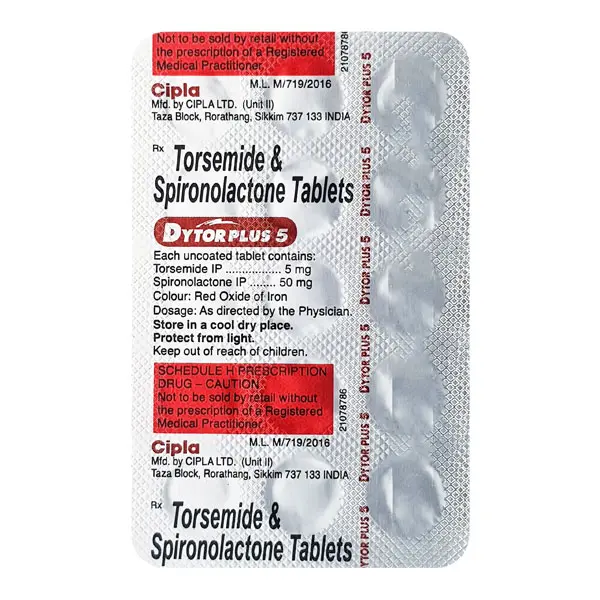

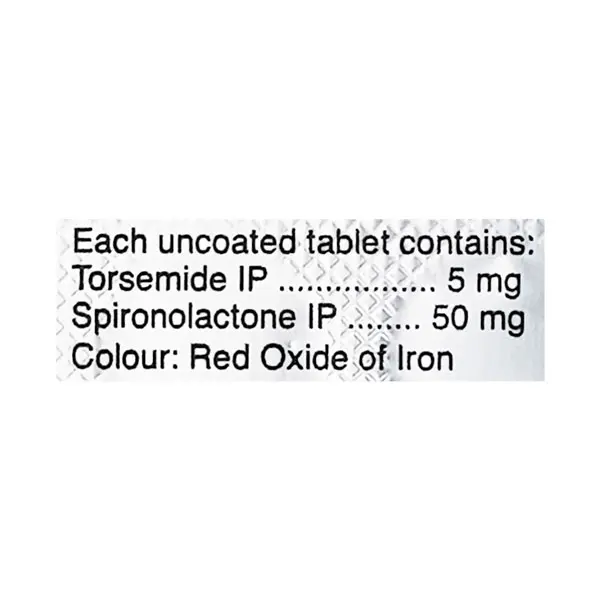
Dytor Plus 5mg Tablet 15s
₹88.76


Estimate Delivery by -


It is best to take Dytor Plus 5 Tablet in the morning along with food in order to avoid frequent urination at night time. For better results, it is suggested to take it at the same time everyday. The dose and how often you take it depends on what you are taking it for. Your doctor will decide how much you need to improve your symptoms. You should take this medicine for as long as it is prescribed for you.
Dehydration is very common side effect of this medicine. It might lower down the level of calcium, sodium, and magnesium in the blood. Hence, regular monitoring of kidney function and electrolytes is important while using this medicine. It might cause dizziness or tiredness, if happens rise slowly from sitting position or avoid driving.
Before taking this medicine, tell your doctor if you have any liver or kidney disease. Tell your doctor if you are pregnant or breastfeeding. You should also let your healthcare team know all other medicines you are taking as they may affect, or be affected by this medicine.
Uses:
- Treatment of Edema
Directions of Use
Side effects
Most side effects do not require any medical attention and disappear as your body adjusts to the medicine. Consult your doctor if they persist or if you're worried about them
- Dizziness
- Frequent urge to urinate
- Headache
- Inflammation of the nose
- Muscle pain
- Gastrointestinal disturbance
- Increased liver enzymes
- Gum inflammation
- Abdominal pain
- Diarrhea
- Memory impairment
- Decreased sodium level in blood
- Anemia (low number of red blood cells)
- Pain during periods
- Abnormal ECG
