

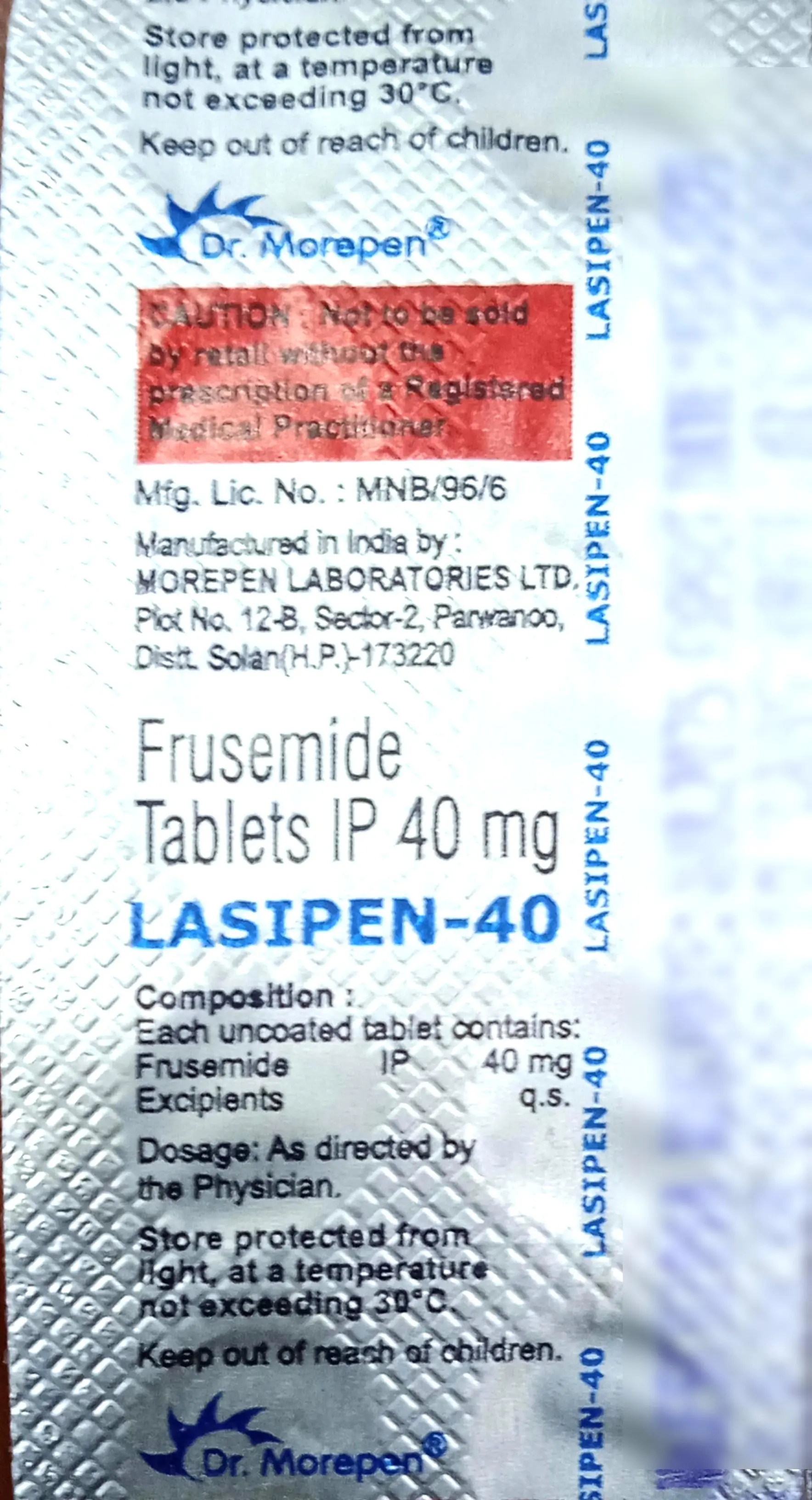
Lasipen 40mg Tablet
₹4.73


Estimate Delivery by -


Lasipen 40mg Tablet works by increasing the production of urine, which helps your body eliminate extra water and salt. It can be taken with or without food, ideally at the same time each day, as advised by your doctor. To minimize nighttime urination, its best to avoid taking this Furosemide-based medicine within 4 hours of bedtime.
Even if you start feeling better, it's crucial to continue taking Lasipen 40mg Tablet as prescribed. Stopping it without medical advice can worsen your condition. Adopting lifestyle changes like stress reduction, limiting salt intake, and quitting smoking can enhance the effectiveness of this medication for both edema and high blood pressure management.
While taking Lasipen 40mg Tablet, some common side effects may occur, including low blood pressure (hypotension), imbalances in electrolytes, dehydration, and reduced levels of potassium and magnesium in the blood. These effects are usually mild and temporary. If they persist or become bothersome, please consult your doctor.
Before starting Lasipen 40mg Tablet, inform your doctor about any existing liver problems. Pregnant or breastfeeding individuals should also seek medical advice before using this Furosemide medication. Regular monitoring of kidney function and electrolyte levels is important during treatment. As this diuretic may lower blood potassium, your doctor might recommend incorporating potassium-rich foods (like bananas, coconut water) into your diet or prescribe supplements.
Uses:
- Hypertension (high blood pressure management)
- Treatment of Edema (swelling due to fluid retention)
- Management of conditions related to Heart Failure
Directions of Use
Side effects
While taking Lasipen 40mg Tablet, most side effects are generally mild, do not require immediate medical attention, and often subside as your body adjusts to the medicine. However, if any side effects persist or cause you concern, it is important to consult your doctor.
- Dehydration (due to increased fluid loss)
- Decreased potassium level in blood (Hypokalemia)
- Decreased magnesium level in blood (Hypomagnesemia)
- Decreased blood pressure (Hypotension), which may cause dizziness
- Electrolyte imbalance (an overall disruption in the body's mineral balance)
