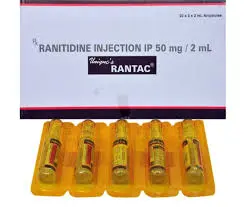
Rantac Injection 50mg 2ml
₹7.4


Estimate Delivery by -


RANTAC contains Ranitidine which belongs to a group of medicines called H2 receptor antagonists. It acts by reducing the amount of acid produced in your stomach. It is indicated for the management of duodenal ulcer, benign gastric ulcer, reflux esophagitis, post-operative peptic ulcer, Zollinger-Ellison Syndrome and other conditions where reduction of gastric secretion and acid output is desirable. It also heals and stop problems caused by heartburn (acid in the food pipe) or indigestion. It can also be used for the prophylaxis and maintenance management of duodenal or benign gastric ulcer in patients with a history of recurrent ulceration.
Ranitidine reduces the secretion of gastric acid stimulated either by food or drugs like non-steroidal anti-inflammatories (NSAIDs), often used to manage arthritis. It reduces gastric acid production by reversibly binding to histamine (H2) receptors present in the lining of gastric parietal cells. It inhibits both basal gastric secretion and gastric acid secretion induced by histamine, pentagastrin and other secretagogues.
Along with this management, your doctor might recommend you, to take enough rest and drink plenty of fluids. Sticking to simple meals and avoiding rich or spicy food can also be beneficial. Avoid smoking and consumption of alcohol during this therapy, as it may reduce the chances of healing and worsen the ulcers. The most common side effects of taking this medicine are stomach pain, constipation or nausea, although not everybody gets them. Before taking this medicine, inform your doctor if you have stomach cancer, kidney problems, porphyria or diabetes. RANTAC should not be taken during pregnancy or while breast-feeding unless considered essential by your doctor.
Uses:
- Used in the management of stomach and duodenal ulcers, heartburn (acid in the food pipe) and indigestion in both adults and in children above 3 years of age
- Stops acid reflux, while under anesthesia during an operation
Directions of Use
This medicine should always be administered by a physician or a nurse into the vein (intravenously) or muscle (intramuscularly). Your doctor will decide the correct dose and duration of therapy depending upon your age, weight and disease condition.
