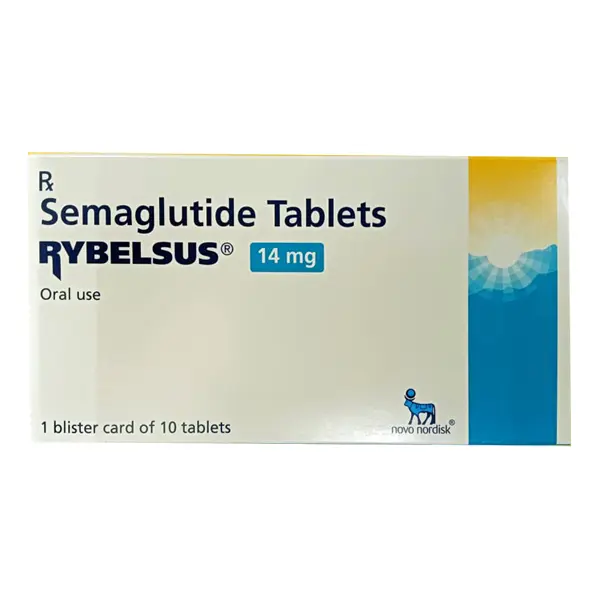
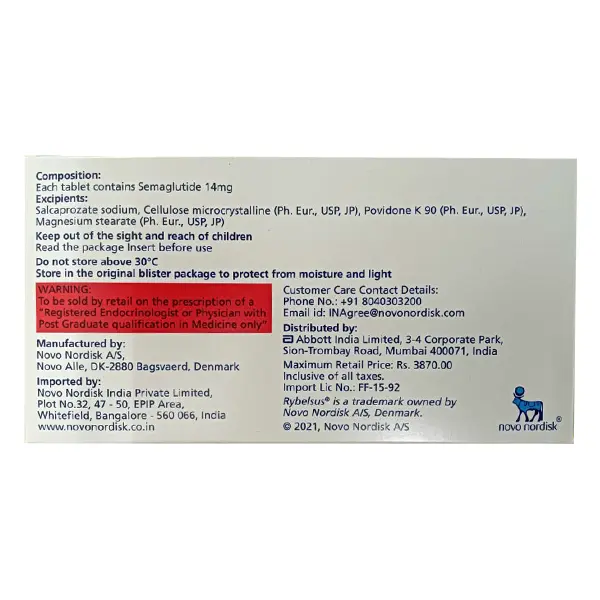
Rybelsus 14mg Tablet
₹3265.32


Estimate Delivery by -


Take Rybelsus 14mg Tablet first thing in the morning, at least 30 minutes before you eat, drink, or take any other medications. Swallow the tablet whole with a small amount of plain water. Always take this medicine at the same time every day for consistent blood sugar management. Along with taking your medicine, eating a balanced diet and exercising regularly will help keep your blood sugar levels stable, especially for individuals managing Type 2 diabetes mellitus.
Common side effects of Rybelsus 14mg Tablet include nausea, abdominal pain, diarrhea, decreased appetite, vomiting, and constipation. These usually get better as your body adjusts to the medicine. To help prevent these side effects, try eating smaller meals and avoiding high-fat foods. If the side effects are severe or do not go away, consult with your doctor.
Rybelsus 14mg Tablet can also lead to low blood sugar levels (hypoglycemia), especially if you are also taking other medicines, like insulin or sulfonylureas, for the Treatment of Type 2 diabetes mellitus. To prevent this, it is important to have regular meals, and always carry a fast-acting source of glucose, such as sugary candy or glucose candy, with you.
Do not use Rybelsus 14mg Tablet if you or anyone in your family has had a type of thyroid cancer called medullary thyroid carcinoma or if you have multiple endocrine neoplasia syndrome type 2 (MEN2). Be cautious if you have a history of pancreatitis. Avoid drinking alcohol as it can affect your blood sugar levels.
Let your doctor know about any other medications or supplements you are taking to avoid potential interactions with Rybelsus 14mg Tablet. If you experience severe stomach pain or signs of an allergic reaction, contact your doctor immediately. Pregnant or breastfeeding women should also consult their doctor before using Rybelsus 14mg Tablet.
'Uses:
- Treatment of Type 2 diabetes mellitus with Rybelsus 14mg Tablet
Directions of Use
Side effects
Most side effects from Rybelsus 14mg Tablet do not require immediate medical attention and usually resolve as your body adjusts to the medicine. However, consult your doctor if they persist or if you are concerned about them.
- Constipation
- Abdominal pain
- Diarrhea
- Decreased appetite
- Vomiting
- Nausea
