
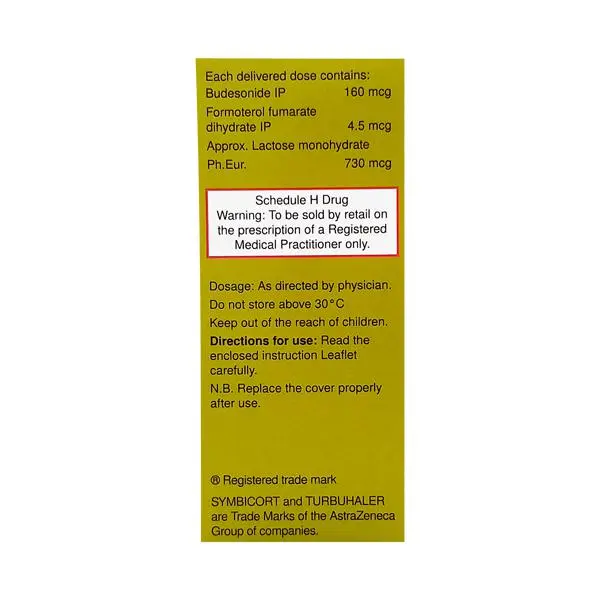
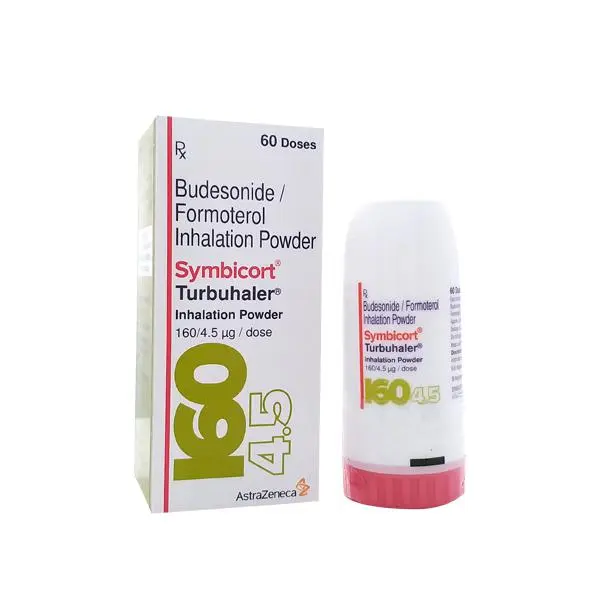
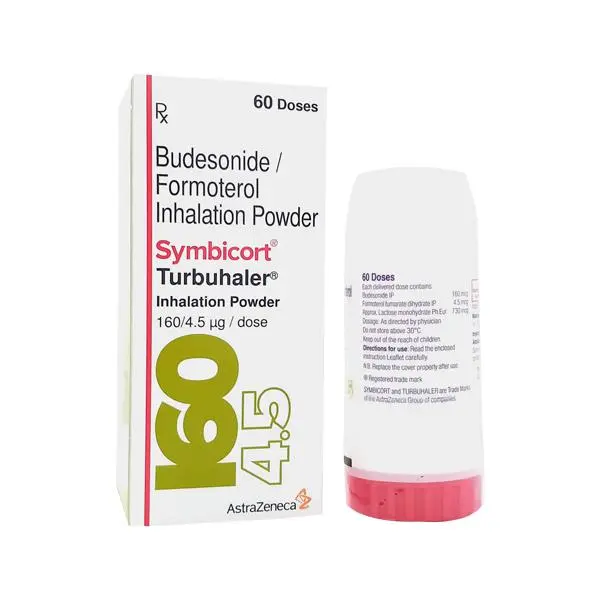
Symbicort 160mcg/4.5mcg Turbuhaler
₹607.5


Estimate Delivery by -


Your doctor will provide specific instructions on how often to use your `Symbicort 160mcg/4.5mcg Turbuhaler`. While you might notice some improvement after a few days, its full benefits for asthma and COPD symptom relief typically develop over several weeks. It's crucial to use this medicine regularly as prescribed, even if you feel well and don't have symptoms. Consistent use ensures it works effectively. Stopping `Symbicort 160mcg/4.5mcg Turbuhaler` prematurely can cause your symptoms to worsen. Please remember, this inhaler is not for sudden breathlessness; always use your rescue inhaler for immediate relief. Proper inhaler technique is essential to ensure you receive the full dose and maximum benefit from your `Symbicort 160mcg/4.5mcg Turbuhaler`.
Common side effects associated with `Symbicort 160mcg/4.5mcg Turbuhaler` include headache, nausea, vomiting, stomach discomfort, and respiratory tract infection. If these occur, do not stop your medication, but discuss them with your doctor. Rinsing your mouth and throat with water or brushing your teeth after each use can help prevent some side effects. If you experience any rare or serious side effects, contact your doctor immediately.
Before starting `Symbicort 160mcg/4.5mcg Turbuhaler`, inform your doctor about any existing kidney or liver conditions so they can determine the most suitable dose. It's also important to tell your doctor if you are pregnant, planning a pregnancy, or breastfeeding.
Uses:
- Treatment of Chronic Obstructive Pulmonary Disease (COPD)
- Treatment and prevention of Asthma
Directions of Use
Side effects
Most common side effects of `Symbicort 160mcg/4.5mcg Turbuhaler` are usually mild and temporary, resolving as your body adapts to the medication. If any side effects persist or cause concern, please consult your doctor.
- Nausea
- Vomiting
- Headache
- Stomach discomfort
- Cough
- Nasopharyngitis (inflammation of the throat and nasal passages)
- Upper respiratory tract infection
- Sinus inflammation
- Fungal infection of oropharynx
- Tremors
- Palpitations
- Voice change
- Pharyngolaryngeal pain
- Influenza
- Back pain
- Oral fungal infection
