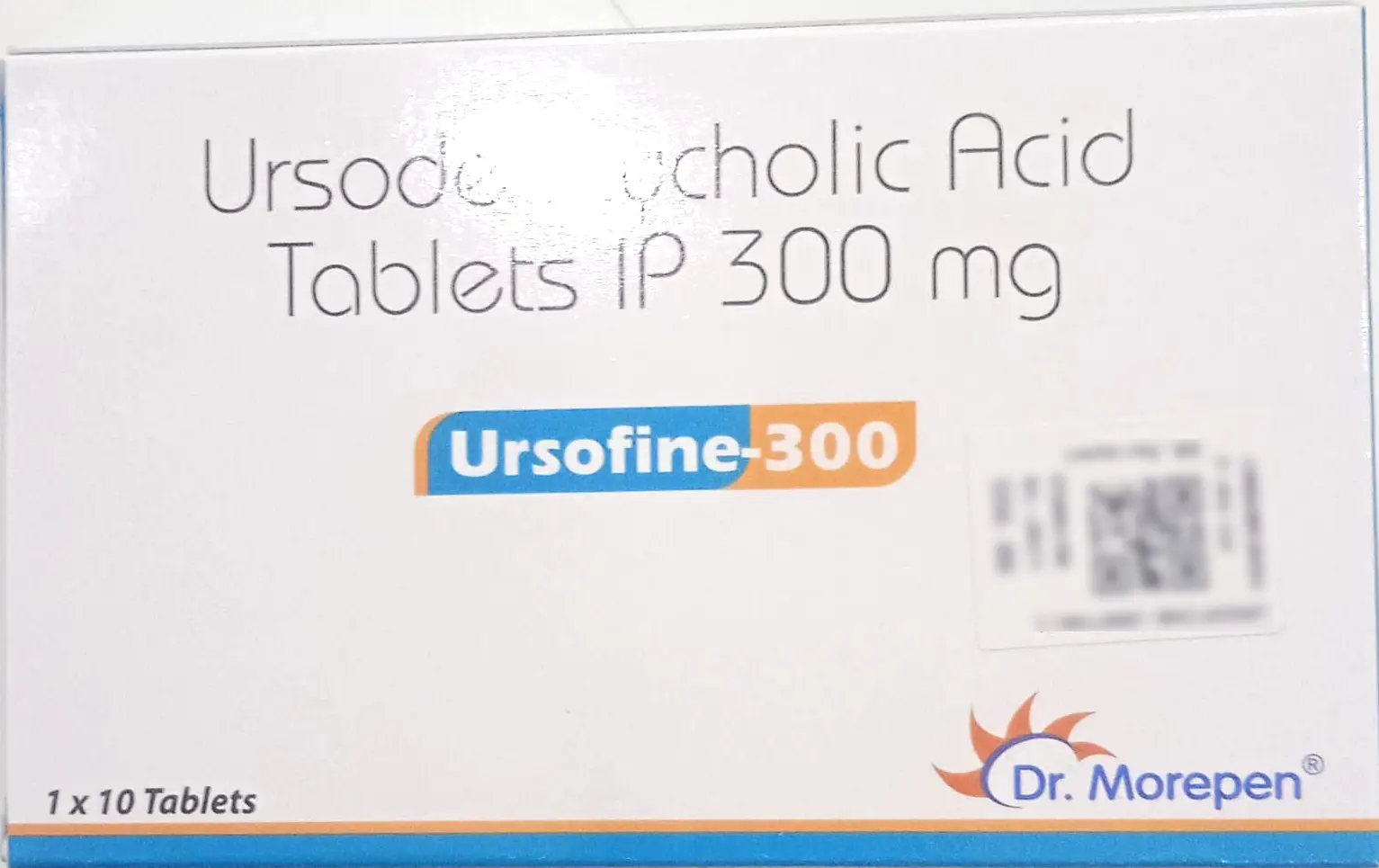
Ursofine 300 Tablet
₹335.5


Estimate Delivery by -


Ursofine 300 Tablet is a medication commonly prescribed for liver and gallbladder conditions. Each Ursofine 300 Tablet contains Ursodeoxycholic Acid 300mg, which is the active ingredient (also known as Ursodiol).
Ursofine 300 Tablet Uses:
- It helps to dissolve certain types of small cholesterol gallstones.
- It is used to treat primary biliary cholangitis (PBC), a chronic liver disease.
- It aids in improving bile flow in the liver for various liver-related problems.
How to Use Ursofine 300 Tablet:
- Typically, you should take 1 tablet daily after food, or as specifically advised by your doctor.
- Swallow the whole Ursofine 300 Tablet with a glass of water without crushing or chewing.
Possible Side Effects:
- Some individuals may experience stomach pain, nausea, or diarrhea.
- Mild itching or a rash can also occur.
Important Precautions:
- Do not use Ursofine 300 Tablet if you have blocked bile ducts or calcified gallstones.
- Always inform your doctor if you are pregnant, breastfeeding, or currently taking any other medications.
Storage Instructions:
- Store Ursofine 300 Tablet in a cool, dry place, keeping the temperature below 30°C.
- Keep this medicine out of the reach and sight of children.
Disclaimer: This medicine should always be used under direct medical supervision.
Uses:
- Cholesterol Gallstone Dissolution: It is used to dissolve small, non-calcified cholesterol gallstones in patients who prefer not to undergo surgery or for whom surgery is not suitable.
- Primary Biliary Cholangitis (PBC): Ursofine 300 Tablet is a standard treatment for primary biliary cholangitis, a chronic autoimmune liver disease. It helps to improve liver function and can slow the progression of the disease.
- Other Liver Disorders: In some cases, it may be used to improve bile flow and manage other chronic cholestatic liver diseases where bile flow is impaired.
Directions of Use
How to Use Ursofine 300 Tablet:
To ensure effective treatment and minimize risks, follow these instructions for taking Ursofine 300 Tablet:
- Dosage: Take Ursofine 300 Tablet exactly as prescribed by your doctor. The typical dosage is usually 1 tablet daily after food, but this can vary based on your condition and doctor's assessment.
- Administration: Swallow the entire Ursofine 300 Tablet with a glass of water. Do not chew, crush, or break the tablet, as this may affect its efficacy.
- Timing: It is generally recommended to take this medication after a meal to help with absorption and reduce potential stomach upset.
- Duration: Continue taking Ursofine 300 Tablet for the full duration prescribed by your doctor, even if your symptoms improve. Do not stop treatment without consulting your doctor first.
- Missed Dose: If you miss a dose, take it as soon as you remember. If it is almost time for your next scheduled dose, skip the missed one and resume your regular dosing schedule. Do not take two doses at once.
Side effects
Possible Side Effects of Ursofine 300 Tablet:
Like all medicines, Ursofine 300 Tablet can cause side effects, although not everybody gets them. It's important to be aware of these and contact your doctor if you experience anything concerning.
- Common Side Effects:
- Stomach pain or discomfort
- Nausea (feeling sick)
- Diarrhea
- Mild itching or a skin rash
- When to Seek Medical Attention:
Although rare, some individuals might experience more serious reactions. Contact your doctor immediately if you notice:
- Severe abdominal pain
- Persistent vomiting
- Yellowing of the skin or eyes (jaundice)
- Dark urine or pale stools
- Signs of an allergic reaction, such as swelling of the face, lips, tongue, or throat, severe dizziness, or trouble breathing.
Always discuss any side effects with your healthcare provider. This list is not exhaustive, and you should read the patient leaflet for complete information.
